It starts with a toss but ends with a cultural takeover. The Indian Premier League, now in its seventeenth year, has become more than just a sporting phenomenon. Over time, it’s India’s most potent soft power tool. What began as a domestic T20 tournament has evolved into a slick, high-gloss spectacle that shapes how the world sees India: fast, chaotic, competitive, and endlessly entertaining.
At a time when national identity is increasingly built through pop culture and media, the IPL operates as a shorthand for modern India. It’s not just the cricket that draws global attention — it’s the Bollywood-backed team ownerships, international player rosters, drone-shot stadium cinematics, and theme music that sounds like it belongs in an action film trailer. For millions abroad, this is India at its most visible — a nation where entertainment and ambition collide in dazzling colour.
The numbers reflect that reach. The IPL is one of the most-watched sporting leagues in the world, with streaming deals stretching across continents. For international brands — from Saudi tourism boards to global soft drink giants — IPL sponsorships are a way to tap into India’s massive consumer base while aligning with the league’s aspirational sheen.
“
If Hollywood was America’s soft power in the 20th century, the IPL may be India’s in the 21st. It packages sport, celebrity, nationalism, and commerce into a single, irresistible export.
”
But the IPL’s soft power isn’t just external. It also reflects India’s self-image. In the league’s aesthetic, we see a country willing to negotiate tradition and hypermodernity — cricket whites have been replaced with neon kits, devotional chants have been repurposed as crowd anthems, and local dialects have been woven into high-production promos. The IPL champions hustle culture, regional pride, and pan-Indian unity — all on a three-hour broadcast.
That said, this cultural diplomacy comes with contradictions. The tournament’s embrace of spectacle can overshadow deeper conversations around labour rights, gender parity in sport, and access to resources. And while Indian players are front and centre, the tournament is still often run with a corporate logic that flattens regional nuance into easily marketable archetypes.
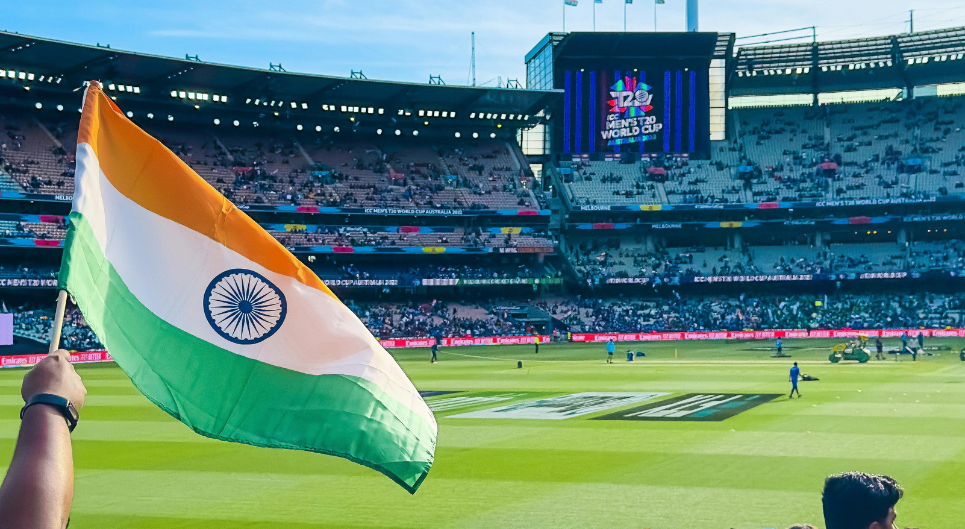
An Indian flag waving in the crowd at the ICC Men’s T20 World Cup | Image Credit: Raunaq Sachdev on Pexels
Still, if Hollywood was America’s soft power in the 20th century, the IPL may be India’s in the 21st. It packages sport, celebrity, nationalism, and commerce into a single, irresistible export. And whether you’re watching from Chennai or Chicago, one thing’s clear — this isn’t just about cricket anymore. It’s about image. And India knows exactly how to play the game.
Rolled out in kitchens across the Indian subcontinent, roti has remained a humble flatbread that has travelled far and wide in tiffins and memories, surviving displacement, scarcity, and change. It moved in the hands of traders, sailors, migrants, and indentured labourers — its shape shifting with every border it crossed. Even in its earliest forms, roti wasn’t just sustenance; it was a migrant story. In the 19th and early 20th centuries, after the abolition of slavery, Britain sent over 1.3 million Indian indentured labourers to far-flung colonies — about 145,000 to Trinidad alone between 1845 and 1917. Alongside clothes and keepsakes, they carried recipes and muscle memory: the instinct to make something familiar in an unfamiliar land.
Where wheat was scarce, they improvised. In the Caribbean, that meant lentils — giving rise to dhalpuri, roti stuffed with split peas and blistered on a hot plate. In Malaysia, Indian Muslim migrants known as mamak stretched dough into roti canai, paired with dhal or sweetened condensed milk. Even Mexico’s tortilla, though corn-based, echoes roti’s logic of adaptability: a flatbread shaped by the land it’s made on. What this really shows is that roti’s evolution has always been tied to power — who moves, who adapts, and whose foodways get preserved or erased.
Culinary Power and Ownership: Who Gets to Tell the Story?
Today, Indian cuisine means different things in different parts of the world. In London, it may appear on a tasting menu; in Trinidad, in a lunchtime wrap; in Kuala Lumpur, at breakfast. This diversity hints at the breadth of Indian food’s migration — but also reveals who gets celebrated and who gets edited out of the frame.
Sliced beef and vegetables on a tortilla | Image Credit: Los Muertos Crew on Pexels
In some Western dining spaces, Indian flavours are reframed as modern or refined, often with little acknowledgement of the histories they carry. British chef Tom Kerridge’s £28 Butter Chicken, for instance, reflects its market and audience, yet became a talking point because of how casually it detached a dish rooted in Delhi homes and dhabas from its cultural context. For many, the issue wasn’t the reinvention — it was the idea of presenting it at a luxury price point without any real nod to where it came from. On supermarket shelves, boutique spice brands continue to favour polished packaging even as conversations about sourcing and credit grow more urgent with the rise of diaspora-led brands.
Of the few Michelin-recognised Indian restaurants in the world, many sit outside India — a reminder that global prestige often arrives only when Indian cuisine is filtered through Western institutions. London alone has multiple Michelin-starred Indian restaurants, while India has none under the official Michelin Guide, which still doesn’t operate in the country. The symbolism writes itself.
At the same time, borrowing isn’t a one-way street. Indian chefs reinterpret French pâtisserie, Japanese matcha, and New York bagels, layering their own histories onto global forms. The question isn’t whether adaptation is allowed — it’s whether the origin story stays visible, and whether those who shaped a dish have a seat at the table when its value is determined.
“
Picture a grandmother in Port of Spain dusting flour off her palms, or a student in London making roti on a tiny stovetop because it tastes like home. For many, cooking it is an act of remembrance. For others, it’s the start of experimentation.
”
Reception and Reality
The flavours may be the same, but the reception rarely is. Restaurants serving “elevated Indian street food” often draw critical attention, while Indian-run dhabas offering similar dishes are rarely spotlighted. Part of this is access — who can secure prime real estate, hire PR, or design spaces that match fine-dining expectations. Part of it is perception: dishes become more “approachable” when plated minimally, spiced subtly, and narrated through a Western frame.
Economically, the landscape mirrors this. The market for Indian packaged foods and spices has grown rapidly, with diaspora-led brands driving global curiosity. Those who control the narrative often control the profits, too.
But these tensions exist within the diaspora as well. A Trinidadian dhalpuri won’t taste like a Punjabi roti, yet both carry the same emotional resonance for those who grew up eating them. Authenticity becomes a question of belonging rather than purity: who decides what counts, and what gets preserved?
A serving of soft-shell tacos | Image Credit: ROMAN ODINTSOV on Pexels
Preserving and Redefining Roti Across Borders
Despite all its migrations and reinventions, roti is still rolled out each morning — soft, warm, familiar. Picture a grandmother in Port of Spain dusting flour off her palms, or a student in London making roti on a tiny stovetop because it tastes like home. For many, cooking it is an act of remembrance. For others, it’s the start of experimentation. Across the globe, chefs, home cooks, and street vendors add to roti’s atlas of identities, each version shaped by history, geography, and personal taste.
In the end, roti’s story isn’t about drawing hard lines between “pure” and “changed.” It’s about recognising that every flatbread — whether folded around curry in Trinidad, flipped in a Malaysian street stall, or plated in a New York bistro — carries the imprint of the hands that made it and the landscapes it travelled through. The challenge is making sure those hands and landscapes aren’t forgotten when the dish arrives at the table.
Open any major platform and a certain pattern appears. A stranger studies quietly on TikTok Live, a creator walks through a supermarket with viewers trailing behind, meditation apps offer modes that resemble shared presence, and AI companions send morning greetings. Productivity tools now include virtual coworkers. These features look like entertainment or efficiency hacks, yet they are built to give people the sense that someone is nearby.
A decade ago, loneliness felt like an interior mood. Now it shapes product decisions across the tech industry. Companies have realised that users return more reliably when something feels companionable. The numbers reflect this shift. Low-interaction livestreams on TikTok have grown steadily over the past two years, AI companion apps have pulled in tens of millions of users around the world, and long, quiet study videos on YouTube continue to draw consistent viewing. The engagement holds even when very little is happening.
The reasons stretch beyond technology. Remote work reduced daily contact, and many shared spaces either changed or disappeared. Cafés raised prices, libraries shortened hours, and neighbourhood spots became harder to maintain. A global survey in 2023 by Meta and Gallup reported that around one in four adults experiences frequent loneliness. It tracks with what people describe in their own lives. As familiar rhythms faded, they began looking for softer forms of connection that could slip into unpredictable days.
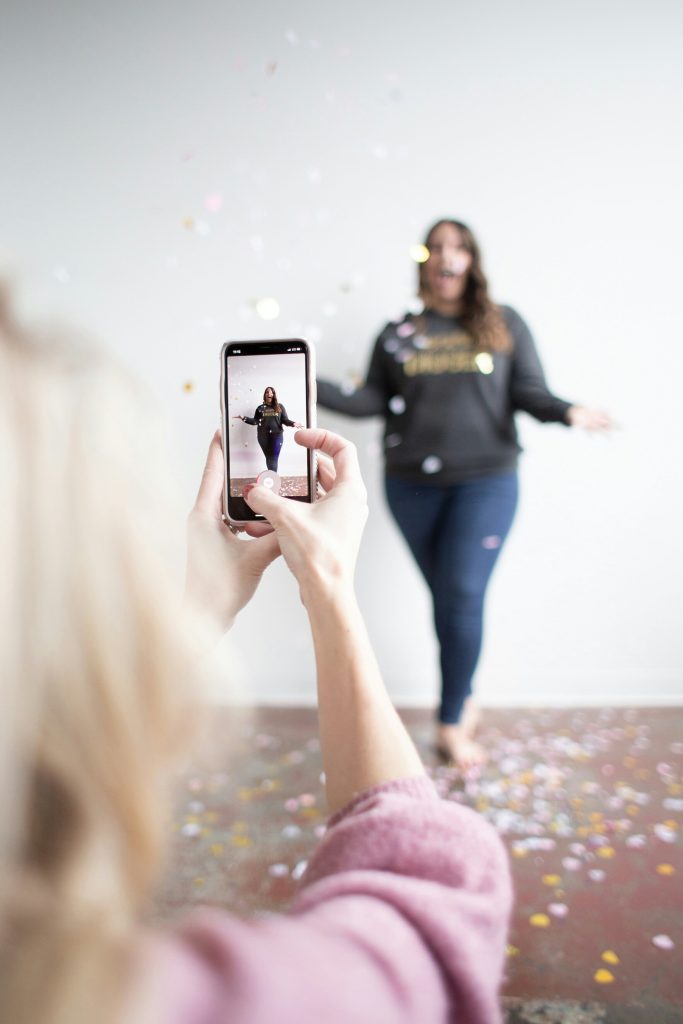
Someone’s presence in the background, even through a screen, can soften the day | Image Credit: Libby Penner on Unsplash
AI accelerated the trend. Companion apps offer a feeling of steadiness without the weight of social performance. Conversations take place at a pace people can manage, which often makes them easier than real ones. The appeal here is quiet. Many users are not searching for romance or fantasy. They want acknowledgement that fits into the edges of a scattered routine.
Livestreams and shared-task videos serve a different purpose. Someone’s presence, even through a screen, can create a backdrop that softens the day. Walking streams, cooking sessions, and silent study rooms are simple formats, yet they mimic the comfort of being around others who are also going about their lives. These spaces carry no pressure, which explains their endurance.
“
Many people are not seeking grand emotional narratives or deep conversation. They want a softer kind of company that can sit beside work, chores, or study, and the world does not offer that easily anymore.
”
The behaviour is most visible among younger users, yet it crosses age groups. Many people feel stretched by erratic schedules, high expectations, and social environments that sometimes feel too demanding. A low-demand connection can feel reliable in a way traditional social life often does not. A livestream does not ask you to keep up. A digital companion stays even when you step away.
Companies respond to what they see. Some now measure engagement in terms of presence rather than taps or clicks. A few surface creators who hold attention simply by showing up regularly. The idea is straightforward. People trust spaces that feel steady, and steadiness keeps them returning.
There are concerns about how these habits develop. Platforms gain when users stay inside their ecosystems, so these environments can expand quietly. Hours drift by. A stream that starts as a background company sometimes takes up a larger share of the day than expected. Comfort and habit can merge without much notice.
Observed among young users, the behaviour crosses age groups | Image Credit: Amanda Vick on Unsplash
Even with the risks, it is clear that these tools fill a gap. Many people are not seeking grand emotional narratives or deep conversation. They want a softer kind of company that can sit beside work, chores, or study, and the world does not offer that easily anymore. Technology stepped into the space left behind by changes in work, housing, mobility, and community life.
The loneliness market is less a verdict on people and more a reflection of the moment. It shows how individuals are rearranging their emotional routines when older forms of casual connection no longer appear without effort. Digital companionship, even when light, offers a sense of continuity that is hard to find elsewhere. The behaviour will shift as the world changes, yet the need that drives it feels durable. People want to move through their day with some feeling of closeness, even when that closeness takes a different shape from what they expected.
On most evenings in mid-20th-century Mumbai, Shivaji Park was not an “amenity.” It was just where people went. Elderly men walked its perimeter. Teenagers practised cricket with taped tennis balls. Women sat on the grass and talked. No tickets. No programming. No expectation that anyone needed to be doing something productive.
Similar scenes existed elsewhere. In New York, Jane Jacobs wrote about Washington Square Park in the 1950s and 60s as a place people passed through, paused in, argued in, lingered in. In Seoul, neighbourhood parks and local jjimjilbangs functioned as everyday social infrastructure well before the city’s current emphasis on speed, efficiency, and twenty-four-hour productivity. These spaces were not neutral or perfect, but they shared a defining feature: you could be there without explanation.
That condition has become increasingly rare.
An al fresco cafè | Image Credit: Sami TÜRK on Pexels
In 1989, American sociologist Ray Oldenburg gave these environments a name in The Great Good Place. He called them “third places”: informal, low-cost spaces outside home and work where people could gather without obligation. Oldenburg’s argument was not sentimental. He was precise. What made third places work was not charm or design, but accessibility. They tolerated idleness. They allowed regulars without requiring membership. They made room for people whose only reason for showing up was time.
What has changed since then is not simply taste. It is structured.
Most third places did not disappear overnight. They were slowly made inhospitable. In Mumbai, Irani cafés like Kyani and Café Ideal once functioned as all-day linger spaces, especially for people who had nowhere else to go between shifts or errands. Rising rents, shrinking margins, and redevelopment pressures have since pushed cafés toward faster turnover. Sitting too long now carries an implicit cost.
In New York, public seating has been systematically reduced or redesigned. Benches are removed, divided, or made deliberately uncomfortable. Parks that once absorbed unstructured social life are increasingly surveilled, policed, or programmed. The goal is not gathering, but control. Space that does not circulate people efficiently or generate revenue is treated as a problem to be managed.
This is not accidental. Cities over the last three decades have been redesigned around transit, productivity, and risk mitigation. Loitering becomes a security concern. Lingering becomes inefficiency. Free time, once an ordinary part of public life, starts to read as indulgence.
“
So the question is not whether third places mattered. They did. The harder question is why we have become so comfortable designing cities that no longer tolerate them.
”
The language follows the logic. “Third place” now appears in real estate decks and brand strategy documents, used to describe co-working cafés, members’ clubs, or lifestyle lounges. These spaces promise community, but only through access. You can belong, but briefly. You can stay, but not for free. Presence is permitted only when it can be justified, monetised, or optimised.
Functionally, this changes how social life feels.
When cafés double as offices, sitting without a laptop becomes suspect. When libraries close or shrink, quiet public refuge disappears. When promenades are designed as backdrops for events and content, stillness feels out of place. The value of doing nothing together erodes, replaced by the expectation that time in public must produce something: work, networking, or proof.
The pandemic accelerated this shift, but it did not invent it. Lockdowns disrupted social reflexes, and the return to public life came with new rules. Interaction felt safer when it was structured: a class, a workshop, a ticketed gathering. Presence alone no longer felt sufficient. There had to be a reason. A receipt.
What gets lost in this transition is difficult to measure, which is why it is easy to dismiss. It is not just space, but familiarity. The quiet recognition of seeing the same strangers every week. The trust that forms without conversation. These are social capacities that emerge slowly, and only in places where people are allowed to exist without performing usefulness.
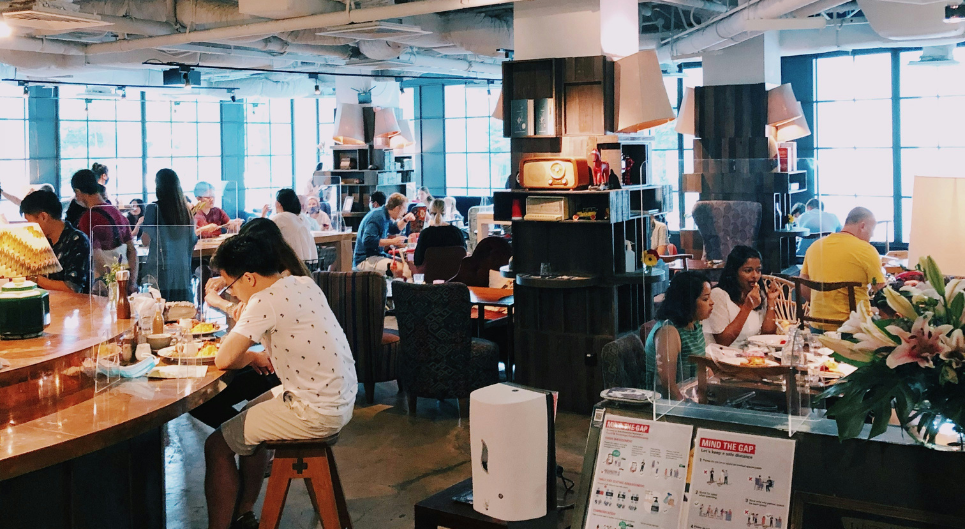
A crowded restaurant at daytime | Image Credit: CHUTTERSNAP on Unsplash
People sense this loss, even if they do not name it. That is why new, improvised versions keep appearing. Community fridges on street corners. Zine fairs in half-empty malls. Chai circles in parking lots. Skate crews occupying forgotten patches of city. These are not nostalgic recreations. They are workarounds. Evidence that the desire for unstructured public life persists even as the conditions that once supported it are withdrawn.
So the question is not whether third places mattered. They did. The harder question is why we have become so comfortable designing cities that no longer tolerate them.
Not everything needs to be activated. Not every gathering needs a theme. Sometimes what is missing is not innovation, but permission: a place where you can sit, take up space, and not be asked what you are doing there.
You’ve probably seen it before, perhaps at a family wedding or on one of those inevitable afternoons spent sifting through your mother’s old sarees. Nestled inside a fading velvet box is a necklace: heavy, intricate, and unmistakably gold. It might have belonged to your grandmother, who wore it on her wedding day before passing it on to your mother, who cherishes it for the memories it holds in addition to its karat value. Because in India, gold has never been just adornment — it’s emotional security shaped into metal.
In a culture where daughters traditionally leave their family home after marriage, jewellery has been one of the few forms of wealth that remains wholly theirs. Gold becomes a safeguard you can wear in joy and sell in crisis, a portable inheritance passed through generations.
That emotional weight has been put to the test in recent years. In 2024, gold prices in India smashed records, crossing ₹1 lakh per 10 grams for the first time — hitting ₹1,01,350 — amid a mix of global uncertainty, inflation, and currency volatility, and they stayed close to that peak into mid-2025. Yet instead of dampening enthusiasm, demand remained unshaken.
A bride’s jewellery is one of the few forms of wealth that remains wholly hers | Image Credit: Freepik
Why Gold Endures
In the West, a diamond might say “forever,” but in India, gold says “for every moment that matters.” It is woven into the rituals that mark life’s milestones: newborns receive tiny bangles, brides in Kerala are layered in kilos of gold, and during Diwali, shopfronts glitter with coins and chains. Across the country, a woman’s jewellery is her streedhan — legally and culturally hers, even after marriage. And for generations, this was the only wealth women legally controlled. Asia now accounts over half of global gold jewellery demand, with India among its biggest drivers.
“
Even global luxury brands are reimagining gold through South Asian aesthetics; French maisons have introduced designs echoing filigree, jali work, and vintage coin pendants — proof that the allure travels well.
”
This bond with gold isn’t only symbolic. It’s practical. In rural and semi-urban India, gold loans remain one of the fastest, most trusted ways to raise cash — no paperwork, no questions. A single bangle can cover school fees. A pair of earrings can fund surgery. The Reserve Bank of India notes that gold-backed loans form a significant share of short-term liquidity in the country. Even the smallest piece — a nose pin worn by a domestic worker, a threadbare bangle on a labourer’s wrist — is both dignity and safety net.
A Cultural Code Shared Across Borders
India’s gold story is echoed across Asia. Chinese families gift gold during Lunar New Year as a blessing for prosperity, and Vietnamese weddings often include gold jewellery as dowry, symbolising stability and honour. Across the region, gold isn’t just ornament; it is security, inheritance, and a cultural shorthand for continuity. In South India’s temples — from Tirupati to Padmanabhaswamy — tonnes of donated gold lie in vaults, much of it given not by kings, but by everyday devotees offering a sliver of personal wealth to the divine.
Changing the Shape, Not the Sentiment
What’s remarkable is how this attachment to gold has adapted without losing relevance. Today’s brides may not want the heavy, rigid sets of their mothers’ era, but they still want gold — just in forms they can wear beyond the wedding day.
“I wanted something I could wear again, not just lock away,” says Zenia, 28, who paired her grandmother’s ornate gold choker with a hand-embroidered gara saree at her Parsi wedding. Instagram is now filled with side-by-side photos of brides alongside their grandmothers, the captions celebrating “tradition meets now.” Jewellers report rising demand for lighter, modular pieces — stackable chains, coins, vintage-inspired designs — that carry heritage without feeling locked in the past. Even global luxury brands are reimagining gold through South Asian aesthetics; French maisons have introduced designs echoing filigree, jali work, and vintage coin pendants — proof that the allure travels well.
Gold is a shorthand for continuity | Image Credit: Lara Jameson on Pexels
The Legacy That Outshines Volatility
India’s households hold over 25,000 tonnes of gold — more than what most central banks keep in their vaults — a quiet sign of how deeply people here trust tangible wealth over markets or digital assets. And more than 60% of that demand still comes from weddings.
That’s the quiet truth beneath the glitter: when families pass down gold, they’re passing down more than wealth. They’re passing down memory, meaning, and a promise that some things — no matter how the world changes — will always hold value.
For much of the past decade, alcohol functioned as shorthand for social fluency in cities around the world. Rooftop lounges in Mumbai, weekend brunches in New York, and club nights in Madrid were as much about signalling ease as they were about what was in the glass. To drink was to belong. To refuse a round, even for personal reasons, often came with questions.
That assumption is beginning to loosen, though not everywhere, and not in the same way. Among Gen Z, shifts in drinking habits and social rituals are becoming more visible. This change is not about wholesale teetotalism. It is about curiosity and choice.
In recent years, a growing number of people globally have begun questioning their relationship with alcohol. Not by quitting outright, but by asking smaller, situational questions: Do I actually want a drink tonight? Do I need it to socialise? To unwind? To feel like I belong? This orientation has come to be known as sober curiosity, a loosely defined movement that encourages moderation, intentional drinking, or opting out altogether, without moralising abstinence.
In the United States and Europe, sober curiosity emerged largely as a response to excess. Youth drinking declined, wellness culture took hold, and the pandemic reshuffled ideas of productivity and self-care. Choosing not to drink became associated with control, mindfulness, and even moral clarity.
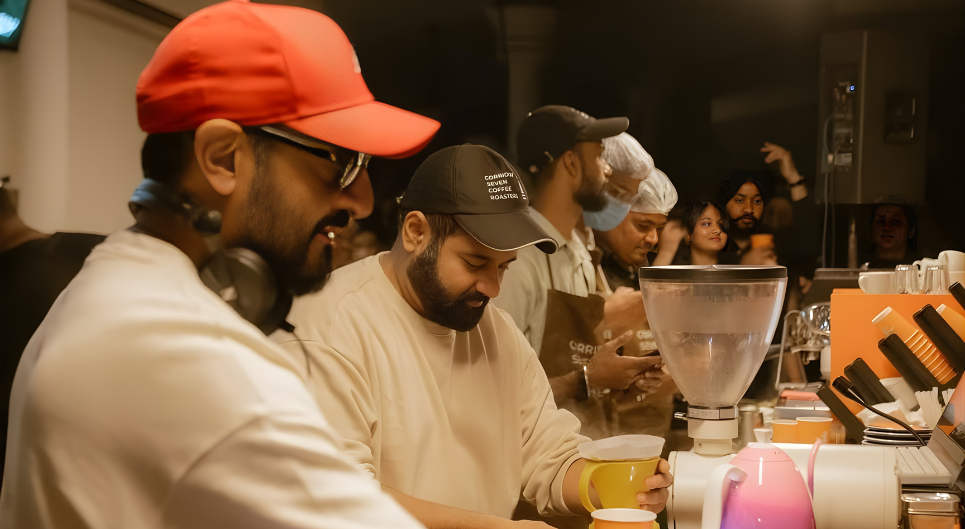
A coffee rave underway at Corridor Seven Coffee Roasters in Nagpur | Image Credit: Mithilesh Vazalwar on Instagram
India’s version looks different, and that difference is the story. For much of the past decade, alcohol in India’s major cities also functioned as a social shortcut, but under different conditions. Drinking was not just about taste or leisure. It was about urban fluency. To drink was to signal modernity and belonging in spaces that were already classed, gendered, and regulated.
Now, across metros and increasingly in tier-2 cities, young professionals are opting out of alcohol situationally rather than ideologically. They are skipping rounds without apology, leaving earlier than expected, or choosing daytime socialising altogether. This is not prohibition, and it is not a backlash. It is conditional participation. Alcohol is no longer an automatic assumption for a social hang.
“
Globally, sober curiosity emerged as backlash. In India, it looks more like recalibration. Less about excess. More about time, cost, and permission.
”
Globally, this behaviour fits under the banner of sober curiosity. In India, it arrives with complications. Unlike Western markets, where sobriety often signals restraint from abundance, India’s relationship with alcohol has always been uneven. Large sections of the population abstain for religious, cultural, or economic reasons. What is new is not sobriety itself, but who gets to frame it as intention rather than constraint.
In English-speaking, urban spaces, not drinking is slowly becoming legible as a choice. That shift is visible in the market. India’s non-alcoholic and zero-proof beverage industry, valued at roughly ₹1.37 lakh crore in 2023, is projected to cross ₹2.10 lakh crore by the end of the decade. Bars in Mumbai and Delhi now offer zero-proof cocktails priced like their alcoholic counterparts, complete with garnish, glassware, and ceremony. The point is not abstinence. It is equivalence. You can opt out without opting out socially.
But the more revealing shift is not happening in bars. Across cities like Pune, Indore, Nagpur, and parts of Mumbai, early-morning “coffee raves” are drawing crowds that once would have gathered at nightclubs. Loud music, packed dance floors, caffeine instead of alcohol, and an exit time before noon. Similar sober daytime parties exist in New York or London, but in India their appeal is structural. They replace nightlife rather than supplement it. They fit around long workdays, shared housing, family expectations, and cost.
This is where India diverges sharply from Western sober-curious narratives. The appeal is not only wellness or mindfulness. It is also efficiency. Alcohol costs time. Hangovers interfere with already compressed schedules. Late nights disrupt routines in cities where commutes are long, private space is scarce, and burnout is ordinary. In this context, sobriety reads less as self-denial and more as control. Not drinking is not about virtue. It is about being functional.
A bottle of Pomegranate Kombucha | Image Credit: Shannon Nickerson on Unsplash
Still, this permission is uneven. Choosing not to drink is celebrated when it appears intentional and curated. It is far less visible when abstention is expected or imposed. Women in India have long navigated sobriety without praise. Working-class abstention has rarely been framed as lifestyle. The current moment becomes visible largely because a certain class can afford to turn moderation into identity.
That tension is what makes India’s sober curiosity worth paying attention to. This is not a wholesale rejection of drinking culture. Alcohol remains central to many social scenes. What is changing is the default. Refusal no longer requires justification everywhere. Social life is slowly learning to accommodate absence.
Globally, sober curiosity emerged as backlash. In India, it looks more like recalibration. Less about excess. More about time, cost, and permission. This shift, uneven and easy to overstate, still marks something real. It reflects a change in how people gather, celebrate, and belong. In a culture where participation has long demanded conformity, opting out without disappearing is a meaningful shift.