Category: Everyday Tech

  • When AI Starts Speaking in Vernacular

    Ask a mainstream AI chatbot for directions in Quechua, or try to joke with it in colloquial Marathi, and something feels off. The words may come back technically correct, but the meaning doesn’t quite land. The response sounds like someone who learned the language formally and missed how it’s actually used.


    That gap isn’t accidental. It reflects where today’s most widely used AI systems come from.


    Large language models are overwhelmingly trained on English-language data, much of it drawn from formal writing, Western media, and standardised registers. When other languages appear, they tend to show up in their most polished forms: textbook Hindi, European Spanish, or standard French. Everyday speech, regional slang, oral traditions, and cultural reference points are far less visible.


    For people outside those defaults, using AI often means translating yourself first.


    That’s beginning to change, largely through regional efforts to rebuild the interface itself.


    Across Latin America, a coalition of universities and researchers is working on LatamGPT, a regionally developed language model trained on Latin American data and contexts. The goal is not scale, but representation, and to build systems that understand how language is actually spoken across the region.


    That matters in a place where Spanish varies sharply by country and class, and where millions speak Indigenous languages such as Guarani in Paraguay, Nahuatl in Mexico, or Mapudungun among Mapuche communities in Chile and Argentina. These languages carry grammatical structures, metaphors, and ways of reasoning that don’t map cleanly onto English.

     

    A model trained on lived languages can understand context | Image Credit: Solen Feyissa on Unsplash


    The challenge goes beyond vocabulary.


    In 2023, ChatGPT was asked to translate the Mexican idiom “me cayó el veinte.” The literal output, “the twenty fell on me,” missed the point entirely. What the phrase actually means is closer to “I finally got it” or “the penny dropped,” a reference to old payphones that only worked once a 20-cent coin clicked into place.


    A model trained on dictionaries can translate the words. A model trained on lived languages understands the context.


    That distinction explains why regional models are gaining urgency.


    India faces a parallel problem at a different scale. With 22 official languages and thousands of dialects, linguistic exclusion is built into digital systems by default. The government-backed Bhashini programme aims to create open language datasets that allow translation and speech tools to function across Indian languages. Alongside it, companies like Sarvam AI are building Indic-language models trained primarily on Indian data, rather than adapting English-first systems after the fact.


    When machines begin to understand how people actually speak, they don’t just talk differently. They also listen differently.
     

    These efforts mirror earlier shifts in digital adoption. WhatsApp’s success in India wasn’t just about cost. It was about accommodation. Voice notes, regional scripts, and flexible keyboards allowed people to communicate without switching registers. Users didn’t have to learn the platform. Instead, the platform learned them for the users.


    Building AI that works this way requires different data and different ethics.


    Much of the world’s linguistic richness isn’t archived neatly online. It exists in oral histories, local television, community radio, street signs, and WhatsApp messages. Turning that into training data raises questions of consent and ownership.


    Projects like Masakhane in Africa and Karya in India approach this collaboratively, paying contributors and keeping datasets open and community-owned. The work is slower and messier than scraping the web. It is also more accountable.


    What’s emerging is not just a technical correction, but a shift in power.


    As AI moves into healthcare, education, and public services, language stops being a cosmetic feature. It becomes the interface through which people are recognised or ignored. When systems understand only formal, standardised speech, they privilege certain users over others.


    When machines begin to understand how people actually speak, they don’t just talk differently. They also listen differently.

  • How India’s App Economy Learned to Read You

    Open a phone in India and it is easy to miss how little effort is involved. Dinner appears in Swiggy before hunger has fully registered. Groceries arrive from Zepto in under ten minutes, timed neatly between meetings. CRED nudges you with a reward that feels oddly well placed. Nothing breaks, nothing asks too many questions, and the system works.


    What disappears in that smoothness is how much learning sits underneath it. Over the last decade, India’s app economy has become exceptionally good at recognising behavioural patterns, not just what users do, but when they do it, how often, and in what sequence. The most successful platforms no longer compete primarily on features or price. They compete on prediction.


    This shift did not begin with manipulation. It began with scale. Between 2016 and 2020, India underwent one of the fastest digital expansions in the world. After Reliance Jio entered the telecom market in 2016 with ultra-cheap data plans, mobile internet usage surged across income groups. Today, four out of five Indian households have a smartphone, and India ranks among the world’s largest consumers of mobile data by volume. According to India’s Ministry of Information & Broadcasting, smartphone penetration crossed 80 percent of households by 2023, while average monthly mobile data usage per user exceeded 20 GB, among the highest globally. Hundreds of millions of users came online in a compressed window of time, often mobile-first and app-first.


    That scale changed the economics of apps almost overnight. Food delivery, quick commerce, and fintech became winner-take-most markets. By 2022, India’s food delivery market was already dominated by two platforms controlling the vast majority of orders, while leading fintech apps reported that repeat users generated a disproportionate share of revenue. Margins were thin, competition was intense, and customer acquisition costs rose quickly. Retention mattered more than novelty. Engagement mattered more than differentiation. Behaviour became the most reliable signal platforms had.


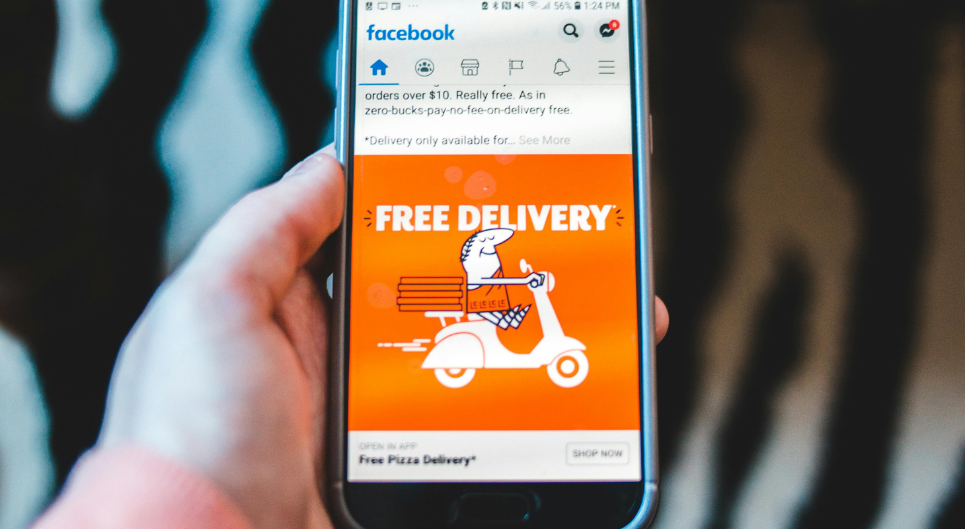
    Food Delivery became one of the winner-takes-most markets | Image Credit: Erik Mclean on Pexels


    So apps began to observe closely. Not in the cinematic sense of surveillance, but in the infrastructural sense of logging patterns. When people open an app, how long they linger, which offers they ignore, which ones they redeem late at night after a long day. Late-evening discount nudges on food delivery apps, for instance, are often timed to coincide with historically higher order completion rates, especially among repeat users. Over time, these traces form behavioural profiles that are less about identity and more about rhythm. Hunger has a schedule, spending has a mood, and attention has a curve.


    The country is overwhelmingly an Android market, which means lower-cost devices, faster adoption, and looser default permission settings. Android accounts for over 95 percent of smartphones in active use in India, a sharp contrast with the United States, where iOS and Android usage is more evenly split. Digital literacy varies widely, and privacy controls are often abstract compared to the immediate payoff of convenience. In this environment, behavioural data is easier to capture than explicit intent, and far easier to monetise. Industry studies consistently show that personalised, behaviour-timed notifications convert at significantly higher rates than generic promotions, making prediction more valuable than stated preference.


    The result is a different relationship between user and platform. The app does not need to ask what you want. It waits, infers, and nudges. Rewards systems, flash offers, and personalised notifications are calibrated around timing rather than persuasion. The aim is not to change behaviour, but to meet it at its most predictable moment.


    This is why many Indian apps feel intuitive. They are not responding to conscious choice. They are responding to repetition.


    Cheap data, dense competition, and a massive, heterogeneous user base make behavioural optimisation unusually valuable. The app economy does not need to persuade users to behave differently. It simply learns how they already do.


    There is also a cultural dimension to this dynamic. In a country shaped by inequality and aspiration, everyday behaviour becomes a resource. Fintech apps learn when users feel optimistic enough to spend. Delivery platforms learn when exhaustion overrides frugality. Patterns drawn disproportionately from urban and semi-urban users are packaged into predictions and fed back as ease.


    None of this is illegal. Much of it is disclosed, technically, through consent screens and privacy policies. But consent here is ambient rather than deliberate. The exchange is rarely stated plainly. In return for speed, convenience, and small moments of pleasure, users offer up patterns of daily life.


    What makes this system powerful is not that it hides, but that it feels normal. This is not a uniquely Indian story. American platforms pioneered many of these techniques. But India is where the model sharpens. Cheap data, dense competition, and a massive, heterogeneous user base make behavioural optimisation unusually valuable. The app economy does not need to persuade users to behave differently. It simply learns how they already do. Over time, this changes what products are built for. Success is measured less by usefulness and more by stickiness. The most valuable users are not the most satisfied ones, but the most predictable ones. Behaviour becomes capital.


    Seen this way, India’s app boom is not just a story of innovation or convenience. It is a story about how everyday life is being translated into signals, and how those signals now sit at the centre of consumer capitalism. The system works because it feels frictionless. But that frictionlessness has a cost. It makes the trade invisible. And that may be the most consequential shift of all.